For Families
How to Talk to a Parent About Accepting Help — Without a Fight
For many older people, accepting help feels like losing independence. The conversation goes better when it's about keeping control, not giving it up.
· 4 min read
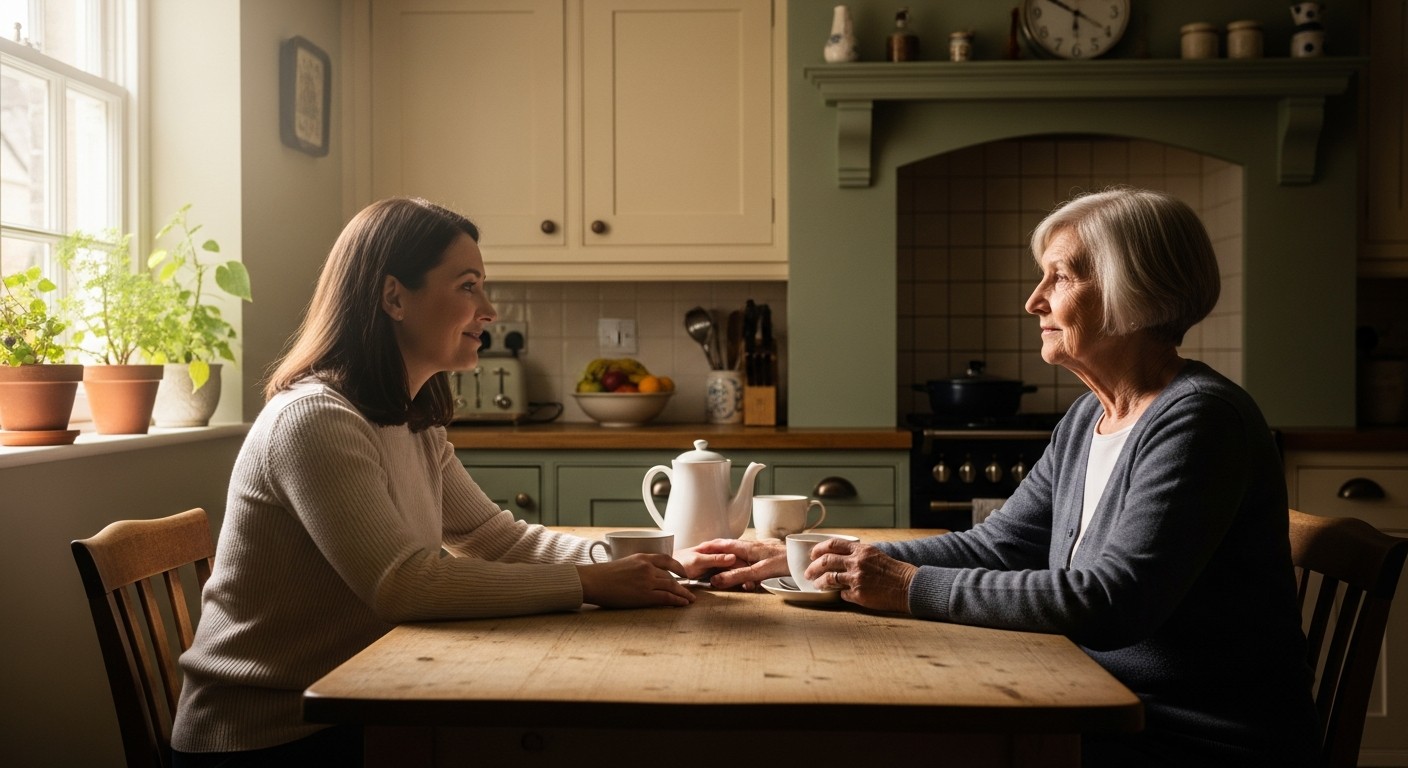
Few conversations are as delicate as suggesting to an older parent that they might need a bit more support. Get the framing wrong and it can feel, to them, like you're treating them as a child — or worse, like the first step towards losing their home and their freedom.
The good news is that how you approach it matters far more than what you're actually proposing. The conversation always goes better when it's about helping them keep control of their life, not giving it up.
Next time you're sitting down with family, use these key strategies to change the dynamic.
1. Lead with their goals, not your worries
Instead of "I'm worried you can't cope," try framing it around their autonomy: "I want to make sure you can stay in your own home safely for as long as possible." Most people will accept a great deal of day-to-day support if they see it as the very tool that protects their independence.
2. Shift from "Are you OK?" to descriptive questions
Vague questions like "How are things going?" or "Are you managing?" trigger a defensive, reflexive response: "Fine, dear. Everything is normal." They aren't trying to be deceitful; they simply want to avoid being a burden or protect their freedom.
To bypass that "I'm fine" reflex, replace vague check-ins with three specific, descriptive prompts:
- "What did you have for breakfast and dinner yesterday?" — Why it works: instead of asking "Are you eating enough?", asking for a recent menu forces a description. Listen for consistency and effort. If they're relying entirely on simple toast or skipping hot meals, it often points to physical fatigue in the kitchen or weariness around meal planning.
- "Have you had a chance to chat with [Neighbour/Friend] this week?" — Why it works: isolation is a quiet challenge, and asking "Are you lonely?" feels stigmatising. Phrasing it around a specific person or club makes it safe to answer honestly. If they brush it off with "Oh, everyone's too busy these days," it's a clear sign their social circle is shrinking.
- "How's your favourite armchair or bed feeling lately — are you getting in and out easily?" — Why it works: mobility changes happen slowly, and parents adapt by quietly modifying their behaviour — avoiding the stairs, choosing a firmer chair they can push up from, or moving less altogether. Catching these early shifts is key to preventing falls before a crisis.
3. Ask, don't tell
Open questions invite them into the problem-solving. Ask "What's been feeling a bit more tedious or tiring lately?" or "What would make your mornings flow a bit easier?" When the ideas come from them, they feel like solutions; when they come entirely from you, they can feel like instructions.
4. Start small
Don't propose a wholesale lifestyle overhaul on day one.
- Pick one low-stakes change first to remove an obvious hassle — like setting up online grocery deliveries or a lightweight daily touchpoint.
- Let a small, low-friction win build trust before diving into larger logistical conversations.
5. Pick your moment
Never raise this in the middle of a stressful day, while rushing to clear up, or straight after a minor argument. A calm, unhurried afternoon over a cup of tea will always go better than a rushed comment on your way out the door.
Remember, this is rarely a single, monumental conversation. It's a series of quiet, gentle touchpoints over weeks and months. Patience isn't a nice-to-have here; it's the entire strategy.
The Step Between Independence and Intervention
Introducing support doesn't have to mean scheduling intrusive home visits or buying clinical panic buttons that signal a loss of youth.
Jules Daily acts as the perfect, low-stakes first step. It checks in with older adults exactly where they already are — via a cheerful, completely dignified morning message on WhatsApp. There are no apps to download and no new technology to learn.
If they're enjoying their routine, your day continues completely uninterrupted. But if a check-in is missed or a change in wellbeing is flagged, you're notified. It keeps them in control of their home, while giving you absolute peace of mind.
- Want a gentle way to keep them safe? Try Jules Daily Free
- Supporting a broader network or care team? Explore Partnerships