For Housing Associations & Developers
Beyond Fire and Damp: Closing the Isolation Gap in Social Housing
Property infrastructure excels at monitoring fire safety and structural health — but the greatest hidden risk to independent residents is human isolation. Here's how a lightweight daily wellbeing check can give housing teams a non-intrusive safety net across an entire portfolio.
· 4 min read
When we talk about risk and compliance in social housing, the focus naturally lands on physical assets: fire safety, gas certification, thermal efficiency, structural integrity. These are measured, documented and audited.
But housing associations, local councils and developers are increasingly confronting a quieter, harder challenge: severe resident isolation.
Every year across the UK, independent residents suffer acute health crises — or pass away — unnoticed inside their own homes, sometimes remaining undiscovered for days or weeks. For housing providers, these events are far more than a human tragedy. They expose real operational vulnerabilities, leave lasting trauma on frontline housing officers, and carry significant regulatory and reputational risk.
The problem has never been a lack of empathy or duty of care. It's that the traditional ways of keeping an eye on independent residents are fundamentally broken.
The friction of traditional welfare monitoring
To stop vulnerable residents slipping through the cracks, providers typically rely on two models — both heavy on operational friction:
- Labour-intensive manual checks. Housing officers and estate wardens running physical door-knocks or phone-call rotas. With rising caseloads and stretched budgets, this simply doesn't scale, and it isn't financially sustainable.
- Intrusive clinical hardware. Hardwired pull-cords, motion sensors and wearable panic buttons. These are expensive to install and maintain across a portfolio — and they meet real resistance. Many independent residents refuse to wear a clinical pendant, seeing it as an affront to their dignity and independence.
Because of this friction, a dangerous visibility gap opens up. Providers are left blind to gradual health declines or sudden falls until a crisis forces emergency services to step in.
A quieter safety net
Modern developments need a lightweight, software-driven layer that keeps a gentle eye on resident wellbeing — continuously, and without compromising privacy or independence.
The key is to separate routine welfare checking from skilled human intervention, using the everyday channels residents already know. Done well, this creates a quiet safety net working in the background across an entire portfolio:
- A gentle daily touchpoint. Residents receive a warm, lightweight morning message on a channel they already use, such as WhatsApp. Nothing to learn, nothing to install, no hardware on the wall.
- Alerts only when they matter. The overwhelming majority of stable, independent days need no staff attention at all. The system quietly holds the baseline and leaves teams uninterrupted.
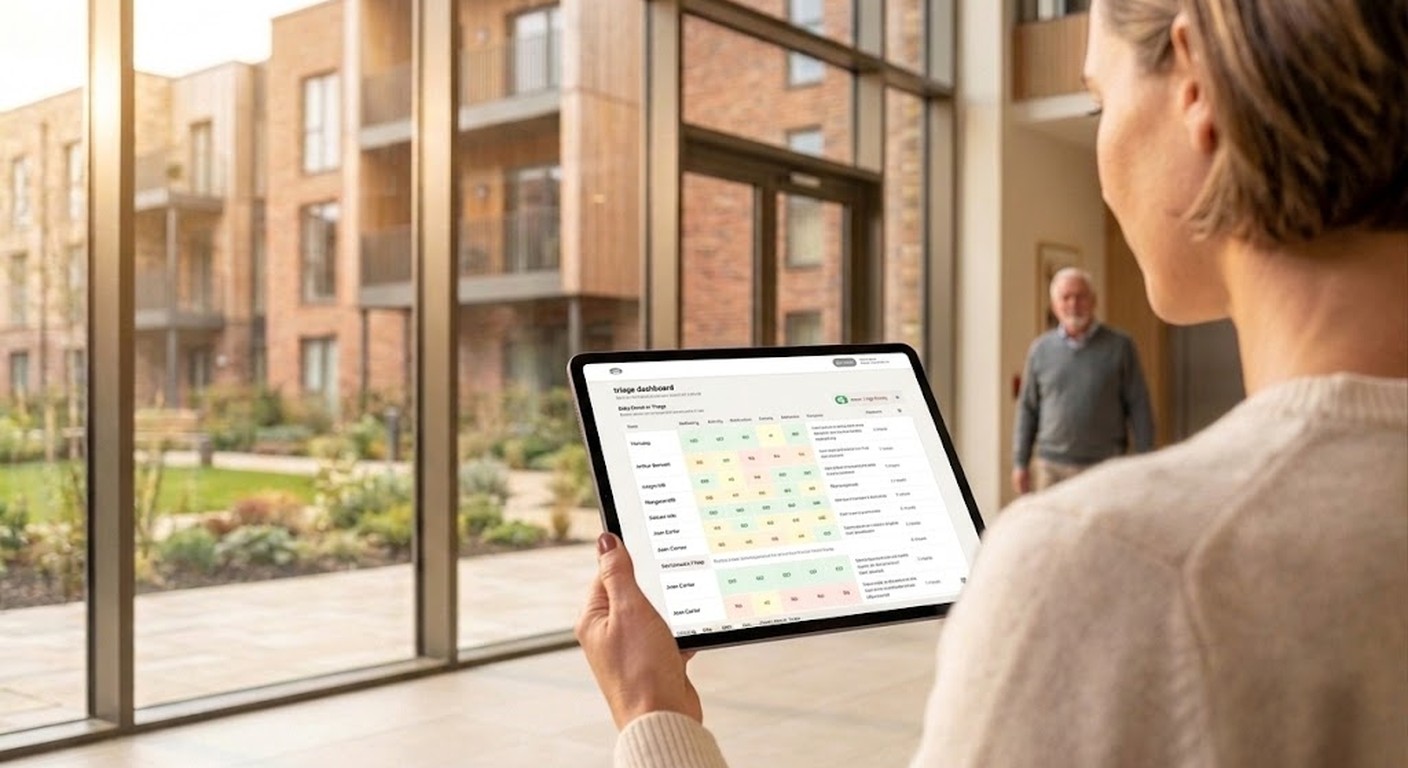
- Directing help where it's needed. The moment a check-in goes unanswered, or a subtle negative shift in a resident's wellbeing appears, an alert lands straight on the housing team's dashboard.
From reactive to preventive
An automated wellbeing layer changes how providers deploy their most valuable resource: people. Instead of working blind across hundreds of tenancies, housing officers can direct their time precisely where an alert has been raised that morning — knocking on a specific door within hours of an unusual change, not days after a crisis.
Against the backdrop of the Social Housing (Regulation) Act 2023 and the proactive consumer standards it introduced, providers are increasingly expected to evidence a preventive, resident-centred approach to safety and wellbeing. A background welfare layer doesn't just protect individuals from the worst consequences of an isolated emergency — it optimises frontline capacity, safeguards organisational reputation, and ensures that "independent living" never has to mean living dangerously unseen.
Build safer communities with Jules Daily
Jules Daily works with social housing developers, local authorities and housing associations to embed a lightweight, scalable wellbeing safety net across residential portfolios. By turning routine daily welfare checks into a warm, automated WhatsApp conversation, we help you protect independent residents, free up frontline capacity, and reduce risk.
Exploring a preventative pilot for your portfolio? Speak to our team